The Rise of the Machines …
How are 3D printers effecting the art of miniatures.

When I think about the ethos of our show, the first thing that comes to mind is how we want people to come to our shows & be inspired; awestruck with the detail & creativity of the work exhibited, but we also want to make sure that people are able to buy something for their dolls house, whatever their budget. This has always been important to us, because after all that is what this amazing hobby is about; creating your own perfect miniature world.
Over the last 40 years, as the Festival has been popping up at Kensington Town Hall, a lot has changed. Technology has brought us so many wonderful tools, making the creation of tiny artwork just a little bit easier & of course the most recent & probably most game-changing is the 3D printer.
The first commercial 3D printers arrived on the scene around 15 years ago, but since then quality has improved & prices have gone down. How does a 3D printer actually work? In basic terms, the user inputs a file into the printer of the item they want to print & the machine builds this up, using a resin, layer by layer, giving an exact copy. The user can create their own files, or use downloadable files that are now available online. It is easy to use, but as with anything, lots can go wrong & you need to have skill & understanding of the printer to get good results.
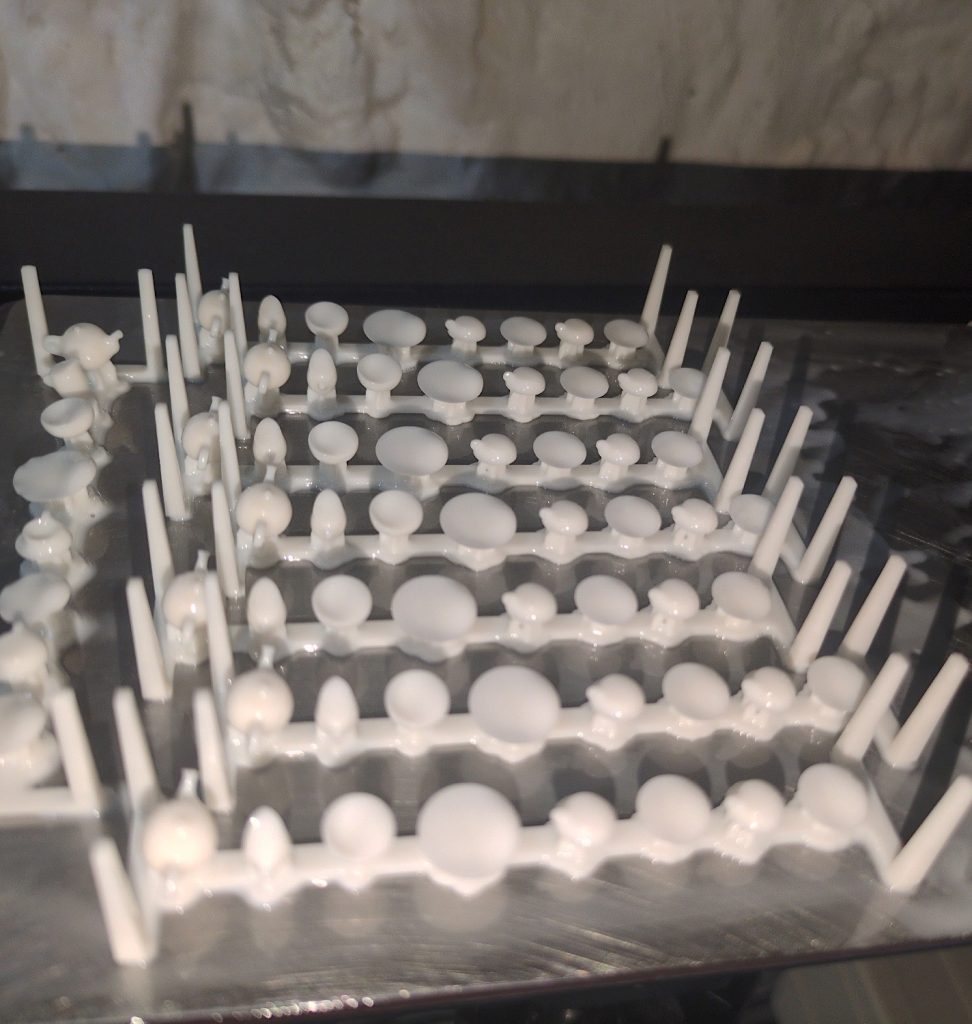
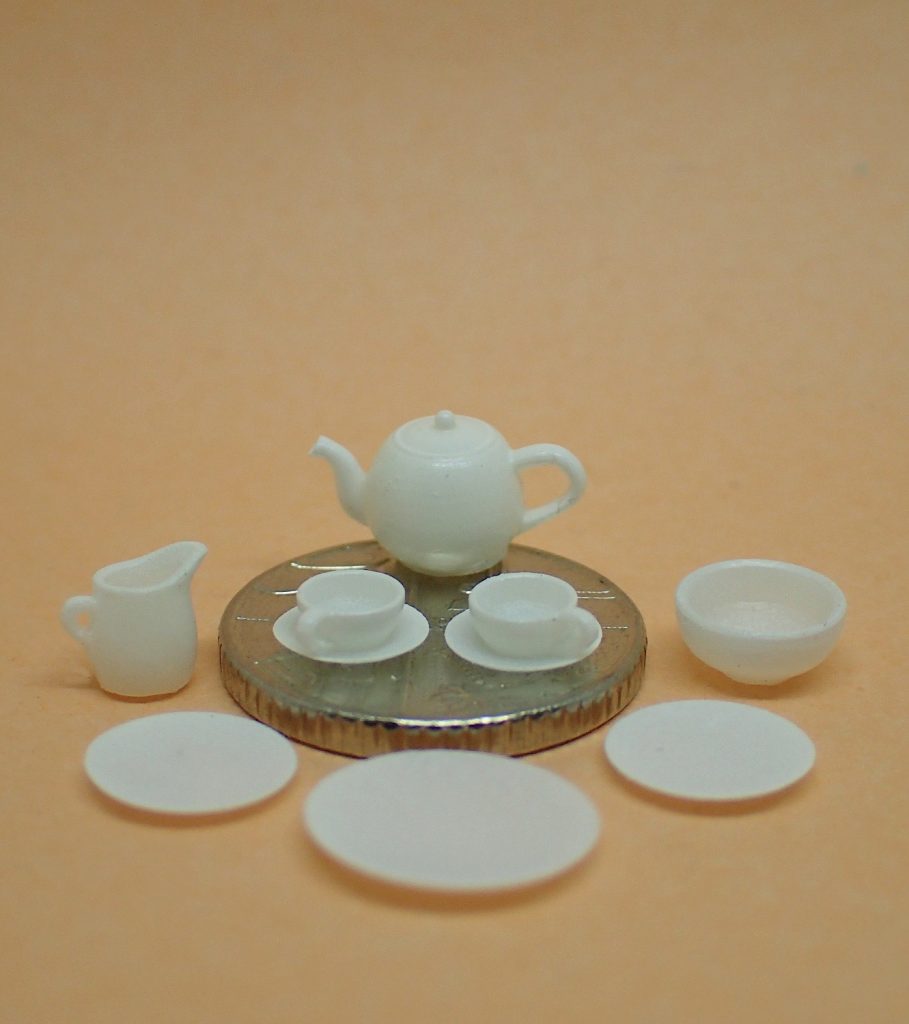
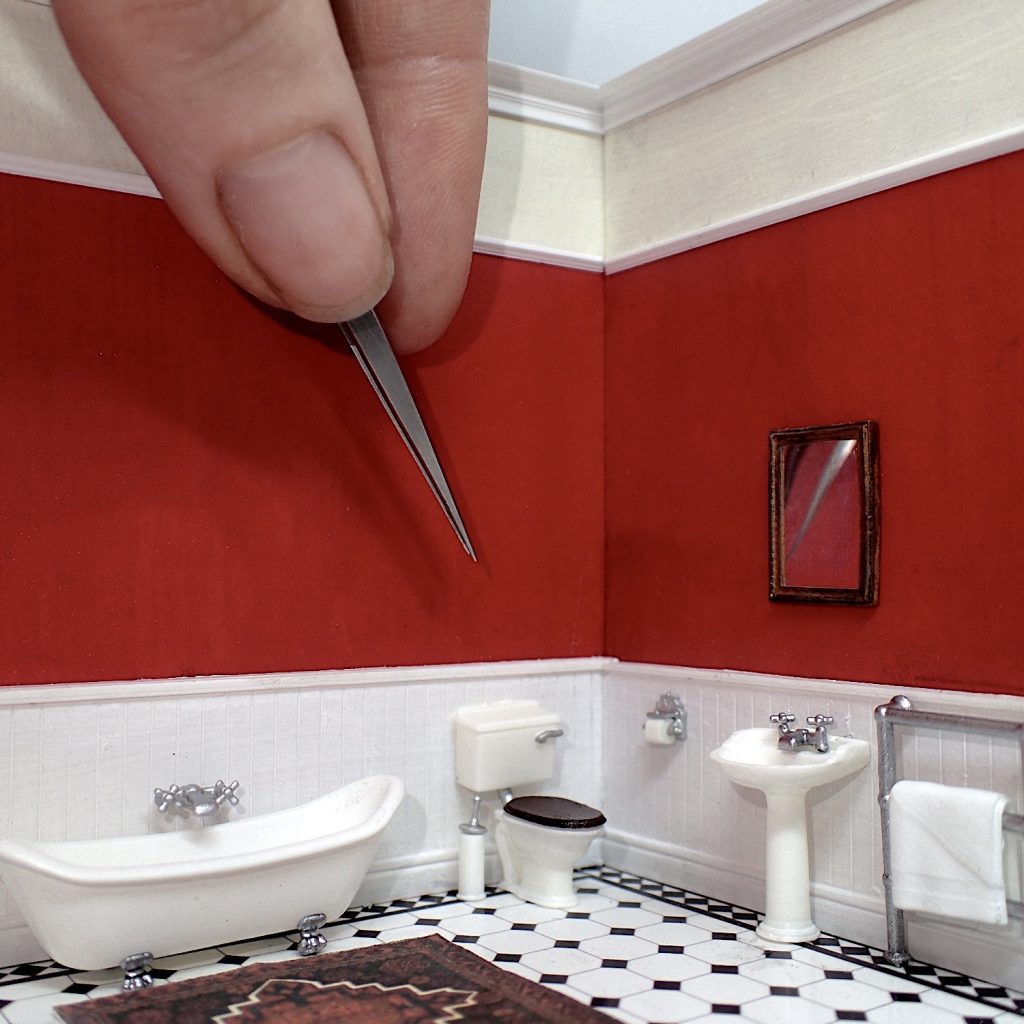
It all sounds too good to be true. This can make a tiny world complete, everything scaled down to a perfect 1:12 or 1:24 scale or even smaller. Amy Scott-Murray of Laser Shink Ray, specialises in smaller scales & explains how 3D printing has made her work possible.
3D Printing helps me because I work exclusively in the smaller scales, where using genuine materials such as wood or fabric becomes increasingly difficult. I hope, in the future, 3D printing will help popularise the smallest scales of miniatures, because it helps us to build real scenes and homes inside our tiny buildings.
The 3D printer is like any other tool, it is only as good at the person using it, so the quality of 3D printed items varies greatly, as with all miniatures.
The 3D printer is like any other tool, it is only as good at the person using it, so the quality of 3D printed items varies greatly, as with all miniatures.
We now have to ask what is the difference between a dolls house & a model? This is not easy to answer, but I feel a model is usually just for appearance. It is a visual representation of a building, normally totally accurate; a finished piece. A dolls house, however, is all about interaction. Picking things up, feeling the weight of an item in your hands, opening drawers & taking off lids etc.
I love the idea of a dolls house being a collection of treasures, gathered from various places, holiday souvenirs, presents from friends, a find in a junk shop, that piece of packaging you turned into a lampshade, alongside all the beautiful miniatures bought at our shows of course. I have never been a purist who wants everything to be perfect, I want to see the character of the owner reflected in their house.
We would never step away from technological developments & many of the craftsmen exhibiting at our shows will use a 3D printer to some degree. These are people we believe understand the tool they are using & show skill & imagination in what they produce. We are aware, however, that the show could get overrun with 3D printed items, so are keeping an eye on how many 3D printed miniatures there are for sale. As I said at the beginning, we want to encourage the skill & talent of all makers & want to make sure dolls houses don’t turn into a version of a Sylvanian home, with everything in it made on a 3D printer. The human touch in a dolls house is what makes it come alive.
This is what we have to keep in mind as 3D printing becomes more commonplace. Some makers will use their 3D printed piece as a cast for metal or ceramic etc, others will paint & finish the 3D printed piece itself to great effect. This means that all items are scaled accurately, but they can feel very light & be rather fragile.
As 3D printing becomes more accessible to all, you no longer need to design the files for the printers yourself. 1000’s of 3D printable files are coming onto the market each month. This makes things difficult for the consumer, as you don’t know if the item you are buying is designed by the person you are purchasing it from. This also means someone can take a craftsmen’s design, copy it & sell it for a fraction of the cost. This is only going to get worse as AI makes it easier for someone to produce a file without much skill.
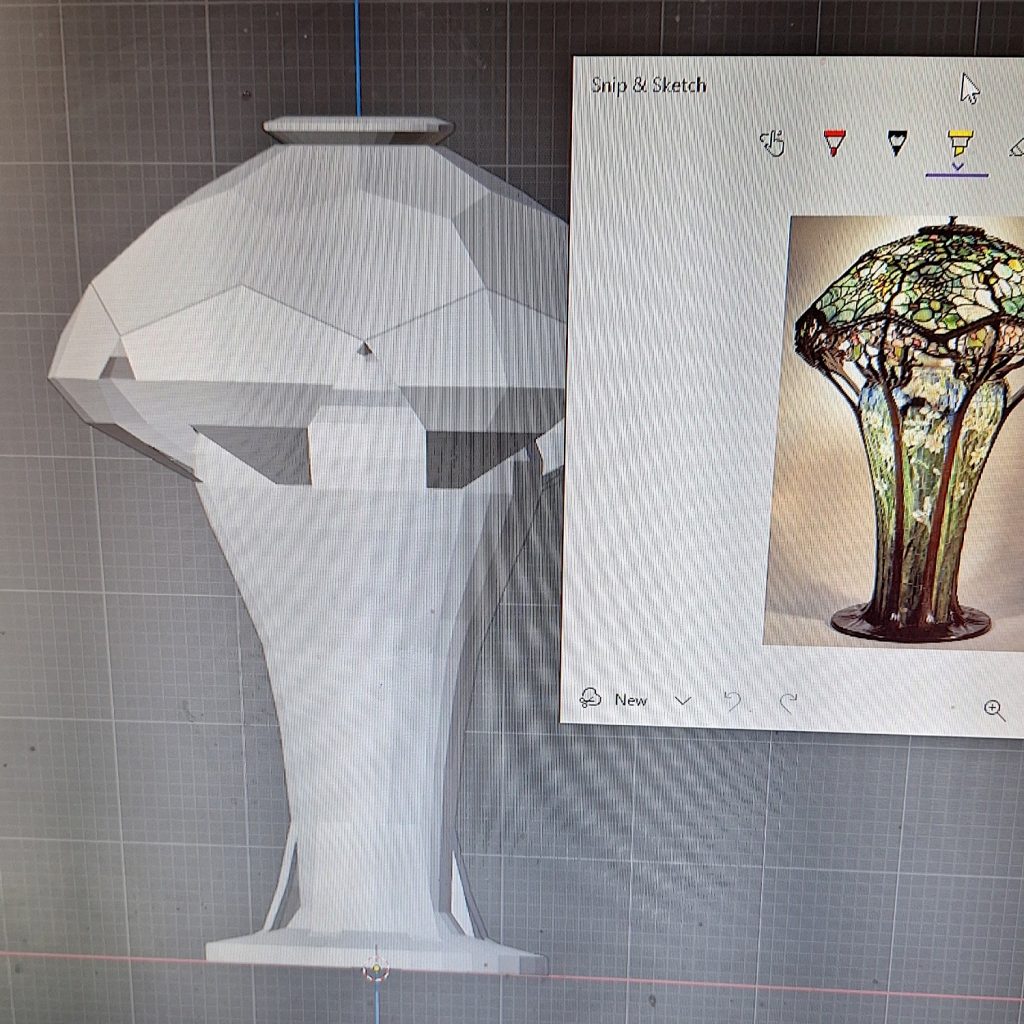

I stress again; we are not anti this technology at all. These printers can be an incredibly useful tool to make fiddly items. A good example are the Tiffany style lights made by Beth Hancock (Entranced Glassworks). Leo Hancock explains:
There are processes that do not translate well into miniature without an extraordinary amount of work. This raises the price of the piece, making it out of reach for many collectors. With our Tiffanies, we had been experimenting with creating ‘real’ pieces made with the copper foiling method with some promising progress, but to even join together two tiny pieces of glass is a surprising amount of work.
There is a Pique a Jour artisan who can replicate the effect using non-3D printed techniques, but again, this raises the time and cost and even then, it is still not the traditional Tiffany method. It also requires the use of precious metals which raises the material cost of their pieces.
So what should you be looking out for when buying 3D printed miniatures?
We recommend if your are unsure about whether an item is 3D printed, just ask. Most craftsmen will be happy to talk to you about their process & how their miniatures are conceived.
We will definitely be watching the development of this art form over the next few years & are excited to see where these 3D printers can take us in the future.

